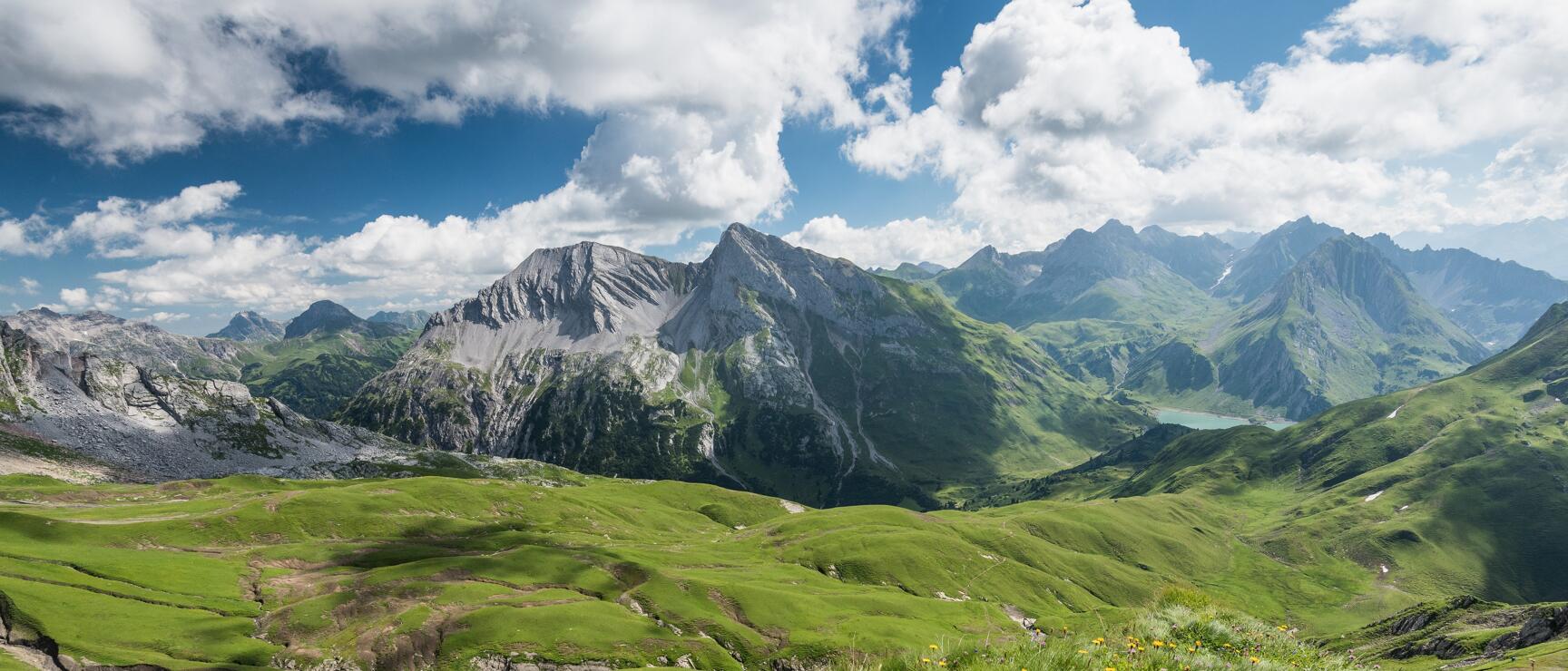
The Arlberg
Alpine spirit amid snow-covered peaks and green high valleys
Introduction
On the Arlberg, you can feel the power of the elements: endless snowfields that merge into one of Europe’s most legendary ski areas in winter – and a summer landscape that comes alive in lush green, cool rock and crystal-clear water. The Arlberg is not a single peak, but a mountain pass connecting Tirol and Vorarlberg – and with it, two Alpine worlds.
Between St. Anton, Lech and Zürs, visitors experience this diversity in its purest form: perfectly groomed pistes, peaceful high-altitude trails, centuries-old mountain culture and a cuisine that brings together nature and indulgence. Whether on skis, on foot or simply taking in the views – this is the Alps at their most authentic and most beautiful. If you haven’t been here, you don’t truly know the Alps.
The St. Anton Summer Card offers numerous discounts and is available free of charge at your accommodation.
The Lech Card is free for guests up to 14 years of age.
Meet the Arlberg
Top highlights
The cradle of Alpine skiing
This is how it all began: In the 1880s, a Norwegian engineer slid over the snow on two wooden boards while working on the construction of the Arlberg tunnel – laying the foundation for a groundbreaking winter sports tradition.
For visitors, St. Anton opens the door to a living heritage: you're not just skiing pistes here, you're moving through accessible ski history. The combination of Alpine adventure and historical depth is what makes a ski holiday here truly special.
A particular highlight is the Ski and Local History Museum St. Anton in Villa Trier. Across several exhibition rooms, it showcases the beginnings of Alpine skiing, the development of the region, railway and tunnel construction, and local cultural history. A visit offers fascinating insights – especially after a day on the slopes.
Lech Zürs – a world-class gourmet village
A holiday in Lech Zürs offers far more than pistes and panoramas – it also delivers culinary excellence found in few other places. Here, you’ll find the world’s highest density of award-winning restaurants per capita. Top-level cuisine is evident in every dish: exceptional craftsmanship meets Alpine authenticity, and international flavours blend with regional ingredients.
What makes it truly unique is the range: from rustic Alpine hut classics to multiple award-winning fine-dining restaurants – every course tells a story of heritage, innovation and flavour.
Top events
Unique places to stay
Part of a wider sustainable movement
Sustainability has long been a lived commitment in the Arlberg – and guests benefit directly from it. In St. Anton, the Egger Weiher ponds have been restored to preserve their ecological habitat. Chemical-free artificial snow and gentle slope maintenance help minimise environmental impact. In Lech Zürs, a small hydropower plant generates 10 to 15 percent of the area’s electricity, supported by biomass heating plants and a strong regional value chain. Local traffic is reduced: Oberlech is car-free, and e-mobility and public transport are actively encouraged.
For guests, this means clear air, unspoilt nature, local food with character – and the good feeling of making a positive choice on holiday.